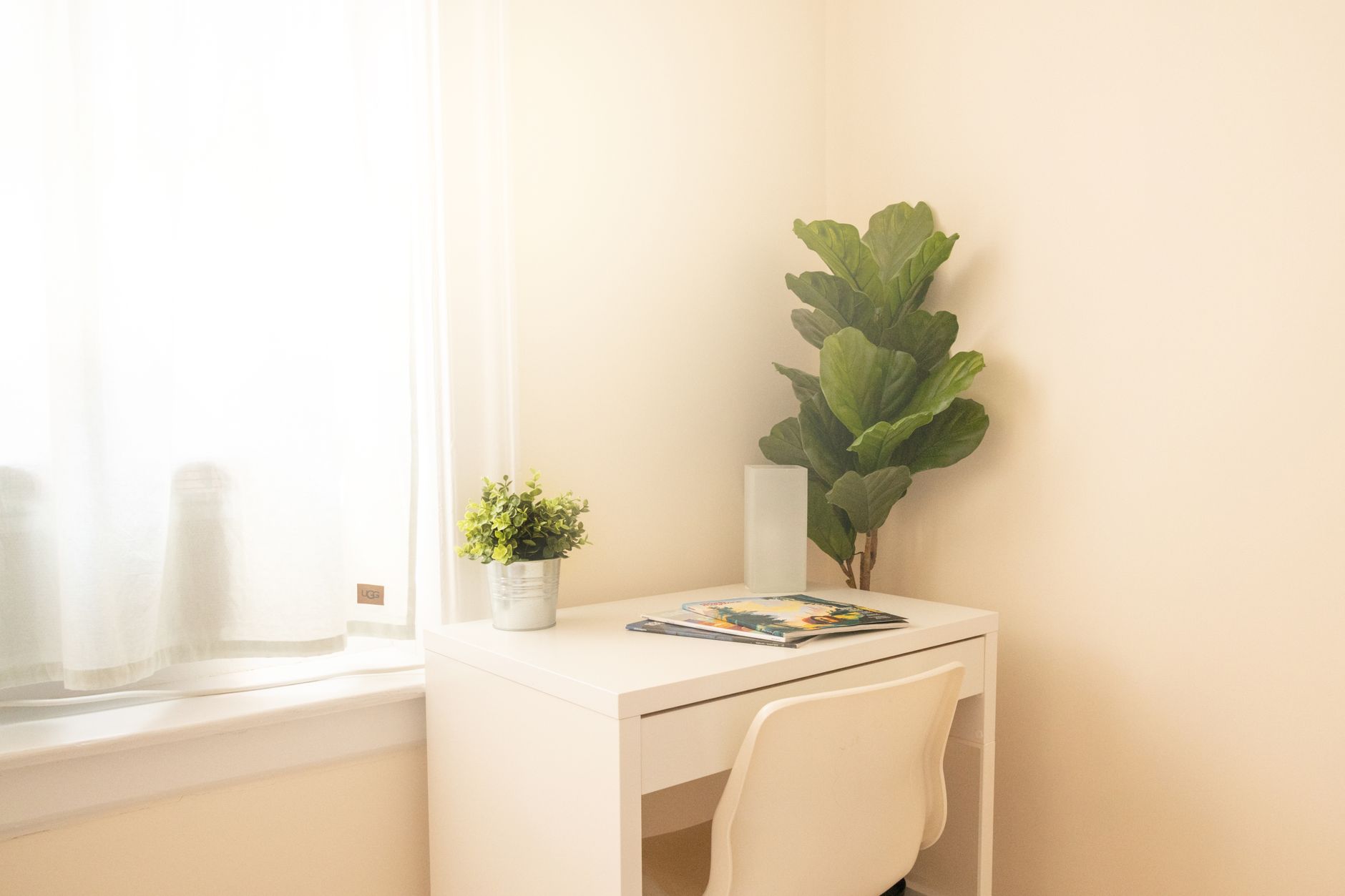
Our recommendations are independently selected from product specifications, manufacturer information, reputable third-party research, and owner-feedback patterns. We do not claim hands-on testing where none occurred.
THE QUICK ANSWER
Protect chair movement and screen distance first, then use walls, arms, folding surfaces, and portable lighting to recover space.
- Keep the floor path clear before adding storage.
- Vertical space is more valuable than tiny desktop organizers.
- A closing ritual matters when work shares a bedroom or living room.
Working from home turns ordinary household choices into part of a professional system. The useful question is not which option has the most features, but which one removes friction from the work you actually do while fitting the room and equipment you already have.
Choose the least contested corner
A visually perfect location is not useful if it blocks a closet or household path. Observe how the room is used before committing furniture.
Choose the least contested corner should support the work rather than become another project to maintain. For how to build a home office in a small space, make the smallest change that can be evaluated clearly. Note what improves, what remains awkward, and whether the solution still works at the end of a full workday.
Move functions upward
Use a monitor arm, peg rail, shallow shelf, and wall-mounted light to keep the desktop available. Do not overload walls or clamp weak furniture.
Move functions upward should support the work rather than become another project to maintain. Check measurements and compatibility in your own room before buying. Manufacturer diagrams are useful, but they cannot account for your chair, reach, doorway, laptop policy, or household constraints.
Create an end-of-day state
A cabinet, rolling cart, laptop drawer, or simple fabric cover helps shared rooms feel like home again. Put shutdown and reset into the work routine.
Create an end-of-day state should support the work rather than become another project to maintain. Leave room to revise the setup. Reusable fasteners, adjustable components, and a straightforward return policy turn an uncertain first choice into a manageable decision.
OUR METHOD
How we chose what matters
We organized this guide around the decisions that have the largest effect on everyday usefulness. Our current research process does not substitute invented lab scores for judgment. Instead, we compare documented capabilities, constraints, service terms, ergonomics guidance, broadly reported ownership patterns, and whether a feature solves a credible work-from-home problem.
We revisit guides when products, standards, or common work patterns change. Read more about how we choose products and our editorial standards.
FAQ
Frequently asked questions
Can I work from a dining table?
Yes, especially with a portable monitor riser, external input devices, and a defined storage bin. Reset the table fully after work.
What desk shape saves the most space?
A shallow rectangular desk is easier to place than most corner desks. Measure screen distance and chair clearance before reducing depth.


